
Walk through any busy building, and you can spot the floors that get hammered. The entrance is gritty within hours. The corridor near the kitchen always has something on it. The meeting room used twice a week? Barely a mark.
That’s the idea behind floor and carpet maintenance. Don’t treat every area the same. Clear loose dirt, deal with spills fast, and go deeper when regular cleaning stops doing the job. Here’s how to build a routine that fits the space, and how to tell when it’s time for bigger equipment.
How Often Should You Clean Floors and Carpets?
There’s no magic number. Foot traffic, floor type, and how much dirt people carry in all change the answer. An entrance might need attention every day, while a quiet meeting room can go much longer.
Carpets
Vacuuming does most of the work, so make it a habit. Spills don’t wait for a schedule, so sort them out straight away.
Deep cleaning is a separate job, and you don’t need it every time you vacuum. Let traffic, visible soiling and the carpet’s overall condition set the timing, not the calendar. The answer on how often carpets need professional cleaning varies a lot from one space to the next.
Hard floors
Hard floors are easier to judge because dirt shows quickly. Grit is the real enemy. It gets ground in under shoes and can wear a surface down over time.
Sweep or vacuum first, then mop when the floor needs it, with a product that suits the material. Tile, vinyl, linoleum and stone all have different needs, so check the manufacturer’s care guidance before you pick a cleaner.
What changes the schedule
- Foot traffic. Entrances, corridors and walkways pick up grit all day.
- Floor type. Different surfaces need different products and methods.
- Everyday use. A busy area needs more attention than a room that sits empty.
- Weather. Rain brings moisture and grit inside, mostly around the doors.
- Spills. If you can see it, it’s already time.
So adjust the schedule area by area. How each space is actually used is a better guide than one routine for the whole building.
Daily and Regular Floor Maintenance
A clean floor can look dirty again surprisingly fast. Dust gets walked around, dirt comes in at the entrance, and small spills are easy to miss. Dealing with them as they happen beats letting them pile up.
Remove loose dirt
Start with what you can see. Sweep or vacuum to pick up dust, grit, and debris before it travels further into the building. A small office might only need a quick pass. A large commercial space takes a long time by hand, and that’s where the right floor cleaning equipment saves real time.
Deal with spills straight away
Fresh spills are easy. Old ones dry, leave a mark, or get tracked around by foot traffic. Use a product that suits the flooring. In a busy workplace, one small spill becomes a big mess once people walk through it.
Watch the busy spots
Entrances, hallways and corridors show dirt first because everyone uses them, and in wet weather they collect moisture and grit from outside as well. Clean them more often than the quiet parts of the building. Keep them under control, and the rest of the floor is easier to look after.
Carpet Maintenance: What Belongs in the Routine?
A carpet can look clean while holding a lot of dirt. Dust and grit work into the fibres as people walk over them, so carpet care needs more than an occasional deep clean.
Vacuum regularly
Vacuuming picks up the dust, dirt, and debris left behind each day. Busy areas may need daily attention, and lightly used rooms can go longer. For commercial carpet, a good upright vacuum cleaner makes the daily job quicker and more thorough.
Stop dirt at the door
A lot of carpet dirt starts at the entrance. People bring in dust, grit, and moisture on their shoes, and it doesn’t take long to reach the carpet. Entrance mats catch some of it first, which matters most in commercial buildings with people coming and going all day.
Rugs need their own approach
Rugs are a different story. Fibre and backing change what’s safe, so cleaning a rug properly starts with identifying the material.
Maintaining Different Types of Hard Flooring
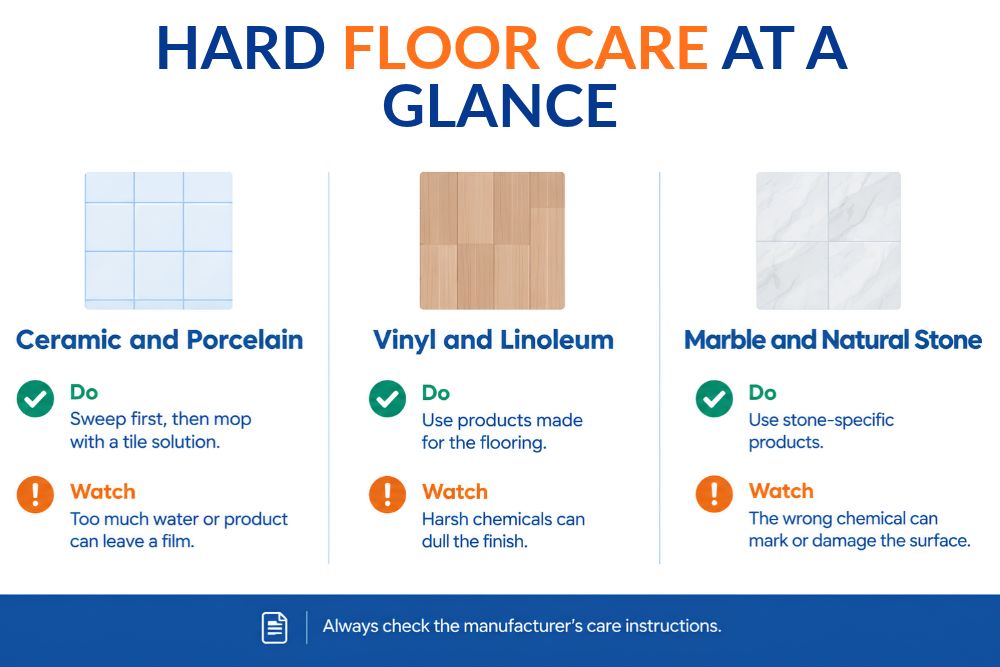
Different floors need different care. A product that works on tiles may be wrong for vinyl, linoleum or stone, so check the material first.
Ceramic and porcelain
Sweep or vacuum first, then mop with a solution made for tiles. Go easy on the water and product, because too much can leave a film that makes the floor look less clean. Grout lines hold dirt too, and cleaning tile floors and grout properly takes a slightly different approach.
Vinyl and linoleum
Both are easy to maintain and common in commercial spaces. They handle everyday foot traffic well, but dirt and grit still wear the surface if they sit there too long. Harsh or unsuitable chemicals can dull the finish, so use products made for the flooring.
Marble and natural stone
Stone is more sensitive to cleaning products than most hard surfaces. The wrong chemical can leave marks, change the finish, or cause damage over time. Stick to products made for your type of stone, and read the manufacturer’s care instructions if you’re unsure.
When Is Routine Cleaning No Longer Enough?
Think of vacuuming like brushing your teeth. Do it every day, and things stay in good shape. But brushing doesn’t replace the dentist, because some build-up only comes off with proper tools. Floors and carpets work the same way.
Watch for these signs:
- Stains that keep coming back
- Visible dirt that vacuuming doesn’t shift
- A carpet that still looks dull after vacuuming
- Residue or a dull finish on hard floors that mopping doesn’t fix
Deep cleaning carpets
A deeper clean removes what everyday vacuuming leaves behind. Knowing the professional carpet cleaning procedure helps you judge what the job involves, and for large commercial areas, commercial carpet cleaning machines keep results consistent.
Deep cleaning hard floors
Hard floors build up residue too, including leftover cleaning product. In busy areas, regular mopping can start moving dirt around instead of removing it. A deeper clean gets the surface back to looking clean. Use a method and equipment that suit the floor.
Choosing the Right Cleaning Equipment
Basic tools are fine for small, everyday jobs. Specialised equipment starts to make sense when you’re cleaning large areas, keeping up with heavy foot traffic, removing deep-set dirt from carpets, dealing with residue, or doing regular commercial work.
Don’t just buy the biggest machine. Think about what you’re cleaning, how much area you cover, how often you’ll use it, and what kind of dirt you’re dealing with.
Carpets. The right machine depends on the carpet, the size of the area, and how dirty it is. Choosing a carpet cleaner machine for your type of facility comes down to how the space is used.
Hard floors. Cleaning a lot of hard flooring by hand takes time. A floor scrubber makes it easier in larger areas, and the best commercial floor scrubbers in Australia are worth comparing before you buy. A floor cleaned daily needs a different machine from one cleaned less often, and the manufacturer’s instructions will confirm it suits your floor.
A Simple Floor and Carpet Cleaning Schedule
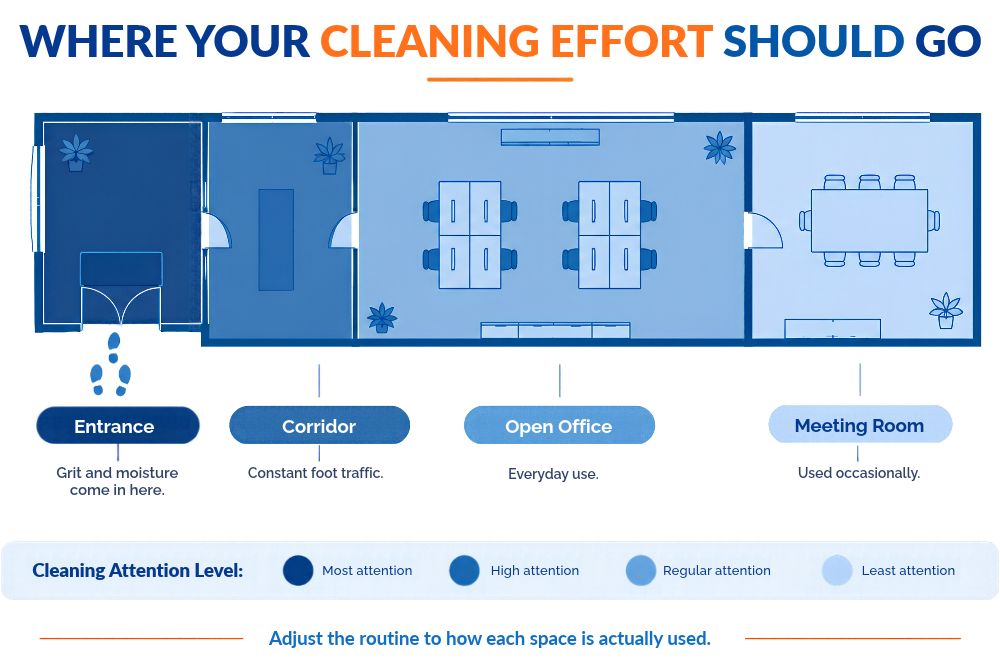
A good schedule fits the way the property is used. A busy entrance won’t need the same attention as a quiet office, so build the routine around foot traffic and the condition of each area.
| Frequency | Recommended maintenance |
| Daily or as needed | Remove visible dirt and debris, vacuum busy carpeted areas, sweep high-traffic floors, and deal with spills as they happen. |
| Regularly | Vacuum carpets thoroughly and clean hard floors with a suitable sweeping and mopping routine. Give entrances and corridors extra attention. |
| Periodically | Look for dirt, staining, or residue that regular cleaning hasn’t removed. Deep clean the area when needed. |
| As required | Increase cleaning when foot traffic, seasonal weather, spills or heavy soiling call for it. |
For commercial properties, separate the busy areas from the quiet ones when you plan the schedule. That keeps your effort where it’s needed instead of treating the whole building the same way.
Common Floor and Carpet Maintenance Mistakes
A regular routine can still miss the mark if you overlook a few basics. These are the usual culprits.
Using the same method on every surface. What works on one floor can cause problems on another. Check the material before you choose a product, machine or method.
Waiting on spills. Fresh spills are easy. Old ones leave stains.
Only cleaning visible dirt. A floor can look clean while dirt builds up where traffic is heaviest. Keep vacuuming, sweeping, and mopping in the routine even when nothing looks wrong.
Giving every room the same routine. Entrances and corridors collect more dirt than quiet rooms, so plan around how each area is used.
Using too much product or water. More isn’t better. Too much water or the wrong solution can leave residue or damage some floors and carpets. Follow the manufacturer’s instructions for the surface.
Conclusion
Good floor and carpet maintenance comes down to knowing what each surface needs and how much use it gets. Keep on top of everyday dirt, deal with spills when they happen, and step things up when a routine clean stops working.
For commercial properties, the right equipment takes much of the hard work out of bigger jobs. Pick it based on the surface, the size of the area, and how often you’ll use it, rather than expecting one machine to do everything.
FAQs
How do you maintain a carpet?
Vacuum regularly, deal with spills straight away, and use entrance mats to keep outdoor dirt off the carpet. If it gets heavy use or starts showing soiling, give it a deeper clean.
How often should carpets be cleaned?
Busy areas need more attention than quiet rooms. Vacuum regularly, and consider a deep clean when stains, soiling, or build-up stay put despite normal maintenance.
How often should hard floors be cleaned?
Entrances, corridors, and other high-traffic areas usually need attention more often than quiet spaces. The right frequency also depends on the flooring type and how quickly dirt builds up.
When does a carpet need deeper cleaning?
When vacuuming no longer keeps it looking clean, or when stains, visible soiling, or build-up remain. The right method depends on the carpet and its condition.
